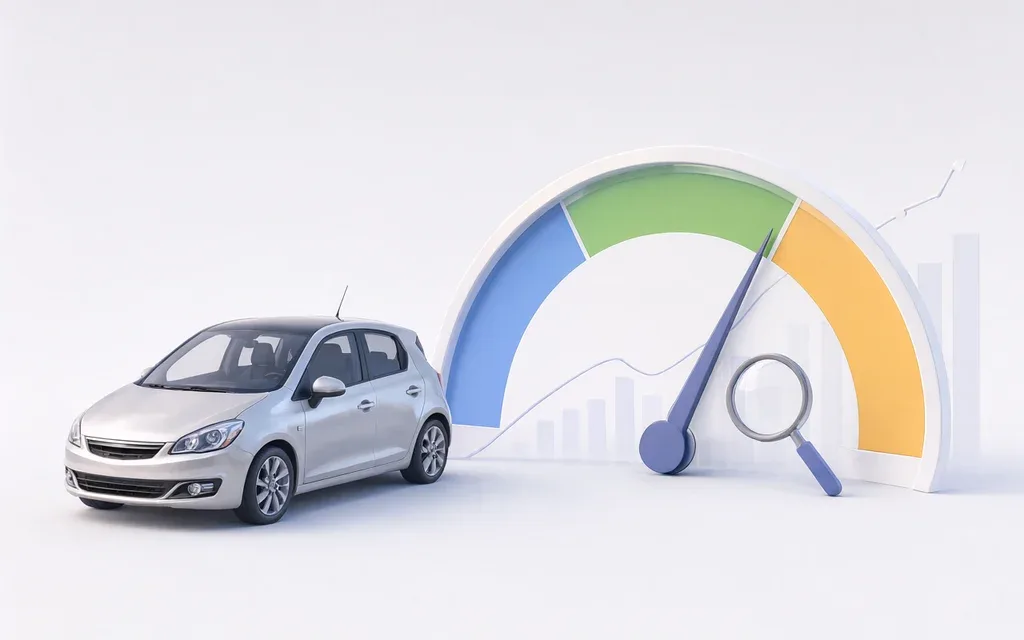
Every day a vehicle stands, it costs you money in stock funding, lost value and capital you cannot use for the next purchase. Waiting for the right buyer almost always costs more than a timely price change. A fixed review rhythm and visibility of days in stock keep the cost under control.
A vehicle has been on your forecourt for four months. It was priced with care, the photos are good and the advert has been live on Autotrader since the day it arrived. Still, no sale. What few dealers see at this point is the bill that has been growing quietly every day.
Holding costs are real costs, even when no invoice arrives. Stock funding interest, depreciation, preparation that has to be redone and the capital that cannot go into the next vehicle all add up, and they keep adding up for as long as the vehicle stands.
What holding costs are made of
The most visible item is stock funding. If the vehicle is funded, you pay interest every day it stands. Take a vehicle with £15,000 of funding at an annual rate of 8 percent: that is about £100 a month in interest alone. Your own rate and fees will differ; the point is that the meter is running.
Depreciation runs in parallel. A used vehicle is worth a little less every month it gets older, and the market moves around it: each new plate in March and September makes it look older, a competitor lists the same model for less, the season changes. The price you could get on day one is rarely available on day one hundred.
The most overlooked cost is opportunity. Money tied up in a slow seller cannot buy the vehicle that would have sold in three weeks. A dealer with a quarter of their stock standing beyond 90 days has a quarter of their capital earning nothing.
Work out your own daily figure
Industry figures for the daily cost of a standing vehicle vary widely, and none of them is your figure. Work out your own: add your stock funding interest, an honest estimate of monthly depreciation for the vehicles you sell, insurance and site costs, and the cost of re-preparing vehicles that stand too long.
Divide it by the number of vehicles and by 30. The result is what one vehicle costs you for every day it stands. Once you know that number, every pricing decision becomes simpler, because you can compare the cost of waiting with the cost of a price change.
The dangerous instinct
The most common response to a slow seller is to wait. The vehicle was bought at a certain price, so the asking price has to stay where it is to protect the profit margin. Every price cut feels like a loss.
This ignores the running costs. If a vehicle has not sold after 90 days, ask what will make a buyer more likely in the next 60. In most cases the honest answer is nothing. The advert has already been seen by everyone searching for that vehicle near you, and they did not buy at this price.
A price cut of £500 after 60 days is often cheaper than another 60 days of holding costs. The earlier cut also frees the capital sooner for a vehicle that sells.
A rhythm for pricing decisions
Successful dealers review every vehicle on a fixed rhythm, not only when they happen to notice it. Every 30 days each vehicle is checked against the current market and its days in stock.
In the first 30 days the price may be ambitious. A well-prepared vehicle that is in demand can sit above the market average while the buyers who care most about condition find it. After 30 days it moves towards the market. After 60 days it should be at market level or just below. After 90 days it needs a decision.
From around 120 days, look honestly at the trade. Selling to another dealer or through an auction at a small profit margin, or even a small loss, is often better than more months on your own forecourt.
Visibility instead of hope
The real problem with slow sellers is rarely the price alone. It is that nobody notices until the monthly stock check, when the vehicle has already stood for 100 days.
Make days in stock visible every day, next to what each vehicle has cost so far. The 90-day mark is not an arbitrary line: it is the point after which the chance of a profitable sale drops quickly. Dealers who act before it protect their profit margin. Dealers who wait pay for hope.